How Many Label Rolls Can You Print on a Single Charge?
Wiki Article
If you are looking to organize your home, garage, or office, a portable label maker is an absolute game-changer. But as you transition away from those old-school, AAA-battery-chugging models to modern, sleek rechargeable lithium-ion (Li-ion) label printers, one crucial question remains:
“How long is this thing actually going to last on a single charge?”
Let’s break down the battery life of modern portable label makers, what affects their juice, and how to get the most out of your organizing sessions.
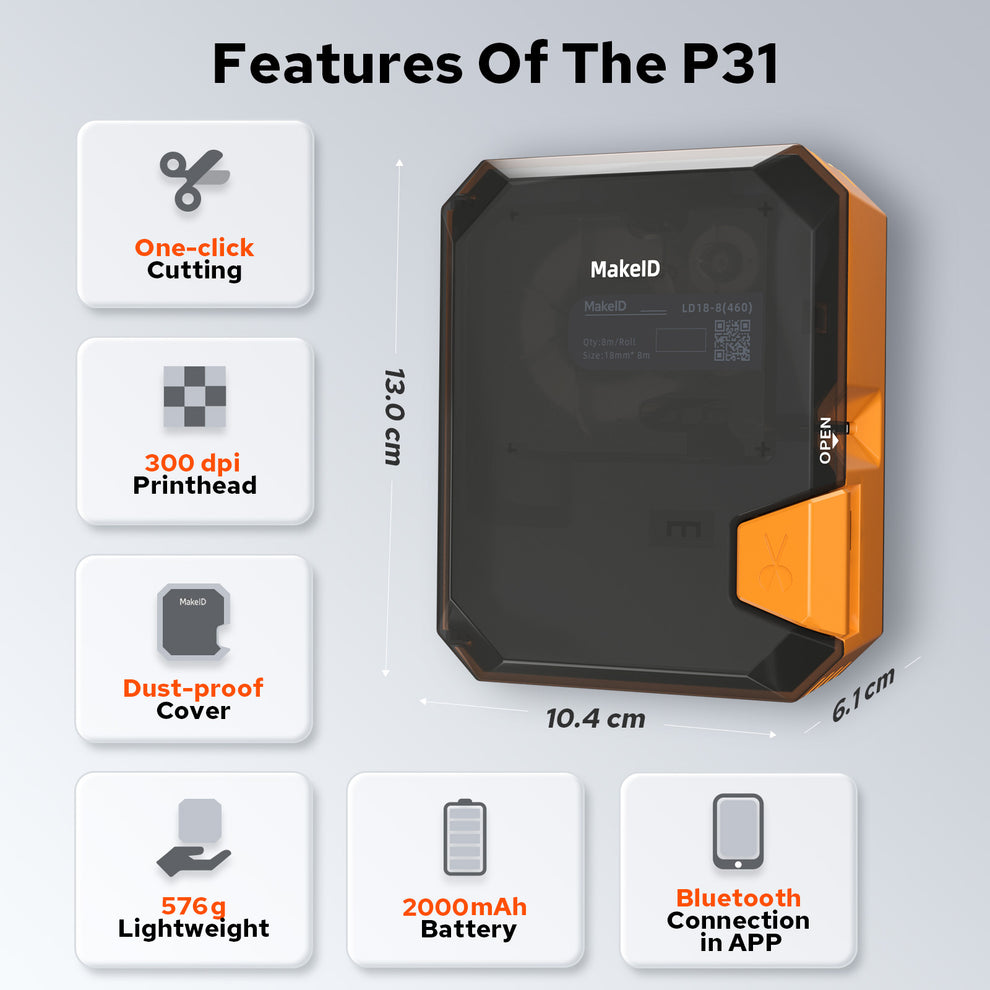
- MakeID P31S Thermal Transfer Label Printer - 300DPI Bluetooth Industrial Maker for Electrical Cable, Wire Tags & Heat Shrink Tubes
The Short Answer: It’s All About the Rolls
Unlike smartphones, which we measure in "hours of screen time," label maker battery life is best measured in the number of label rolls it can print or total printing length.
On average, a standard portable lithium-ion label maker (equipped with a 1000mAh to 1500mAh battery) can last:
Continuous Printing: Roughly 1.5 to 2.5 hours of non-stop printing.
In Real-World Terms: About 3 to 5 full rolls of tape (roughly 20 to 30 meters of labels) on a single charge.
Standby Time: Up to 30 days if left unused in a drawer.
For the average user organizing a kitchen pantry or a closet, one full charge can easily last 2 to 4 weeks of intermittent use.
What Drains the Battery?
Not all labeling sessions are created equal. Here are the three main factors that determine how fast your battery bar drops:
1. Thermal Printing Requires Heat
Most portable label makers use direct thermal printing technology. This means the print head has to rapidly heat up to activate the inkless chemical reaction on the label tape.
Darker designs, bold fonts, and heavy barcodes require more heat and draw more power than simple, thin text.
2. Bluetooth Connectivity
Modern label makers rarely have physical keyboards anymore; they connect to your phone via Bluetooth. Keeping a stable wireless connection open drains a small but consistent amount of background power.
3. Automatic Cutters
If your label printer has a motorized automatic cutter that snaps the tape after every print, it uses a mechanical motor. This consumes significantly more power than models where you have to press a manual plastic cutter lever.
Lithium-Ion vs. AAA Batteries: Why Upgrading is a No-Brainer
If you are still on the fence about buying a rechargeable model versus a cheaper one that takes alkaline batteries, look at the math:
Feature | Lithium-Ion (Rechargeable) | AAA Alkaline Batteries |
Convenience | Charge via USB-C (just like your phone). | Have to keep buying/replacing 4–6 batteries. |
Performance | Constant voltage ensures crisp prints until empty. | Prints fade as the batteries weaken. |
Eco-Friendliness | Reusable hundreds of times. | Generates electronic and chemical waste. |
3 Tips to Extend Your Label Maker’s Battery Life
Want to make sure your printer doesn't die right in the middle of a major organizing project? Follow these quick tips:
Batch Your Printing: Design all your labels in the app first, then print them all in one go. This keeps the print head warm and efficient, rather than letting it heat up and cool down repeatedly.
Turn it Off Manually: While most devices have an auto-sleep feature, turning it off manually as soon as you are done prevents the Bluetooth from searching for your phone in the background.
Avoid Extreme Temperatures: Don't leave your label maker in a freezing garage or a hot car trunk. Lithium-ion batteries hate temperature extremes and will lose capacity quickly.
The Verdict
For everyday home and office organization, a rechargeable lithium-ion label maker offers incredible endurance. You can comfortably label your entire kitchen, file cabinets, and cable setups on a single charge without ever worrying about running out of juice.
Happy organizing!
Report this wiki page